Early History

Extract from the Doomsday book
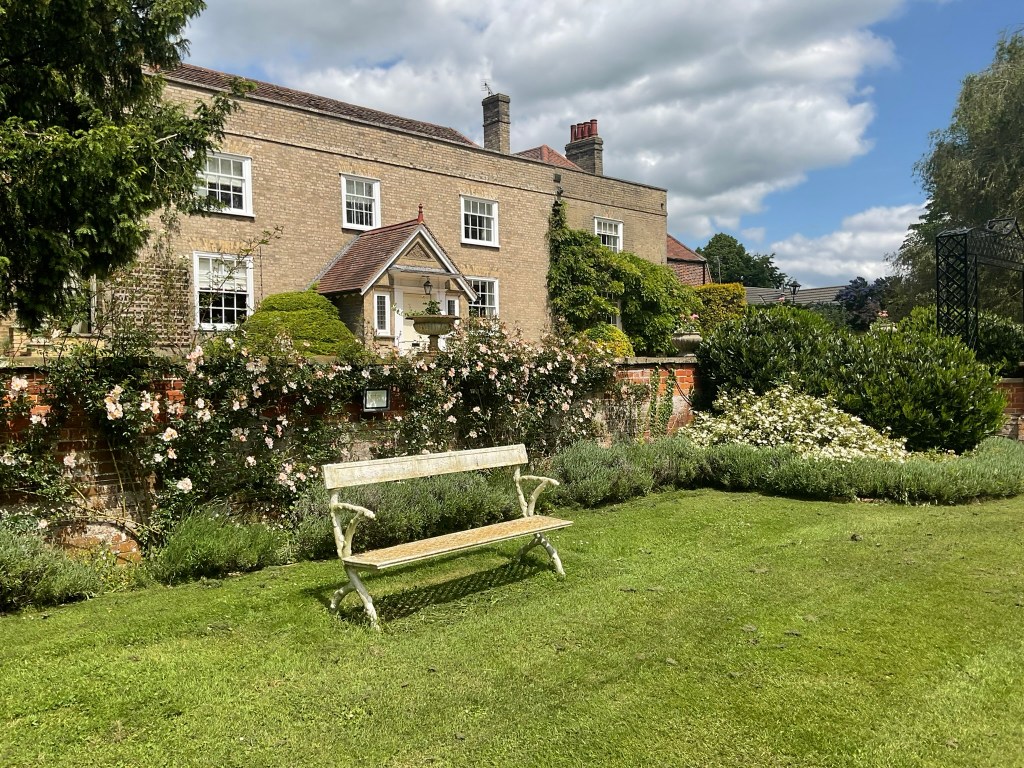
Blunts Hall is a Grade II listed property set in three acres of managed garden. Mentioned in the Doomsday Book as a manorial site, owned in part by Eustace of Boulogne and in part as the Honor of Peverell by Humfrey. The site fell into the hands of Henry I who granted it to Stephen who, after his succession to the throne, granted it to Geoffrey de Mandeville.
The original structure dates to 1230, with 17th, 18th, and 19th century additions. Blunts Hall Ringwork, within the grounds of the Hall, is a scheduled Ancient Monument. Archeological excavations undertaken in 1958 and documentary evidence suggest the ringwork was constructed in 1141, as a site for an adulterine castle (baronial castle erected without a royal charter, commonly during the ‘anarchy’ of Stephen’s reign). It was abandoned during the reign of Henry II.
Turn of the 20th Century
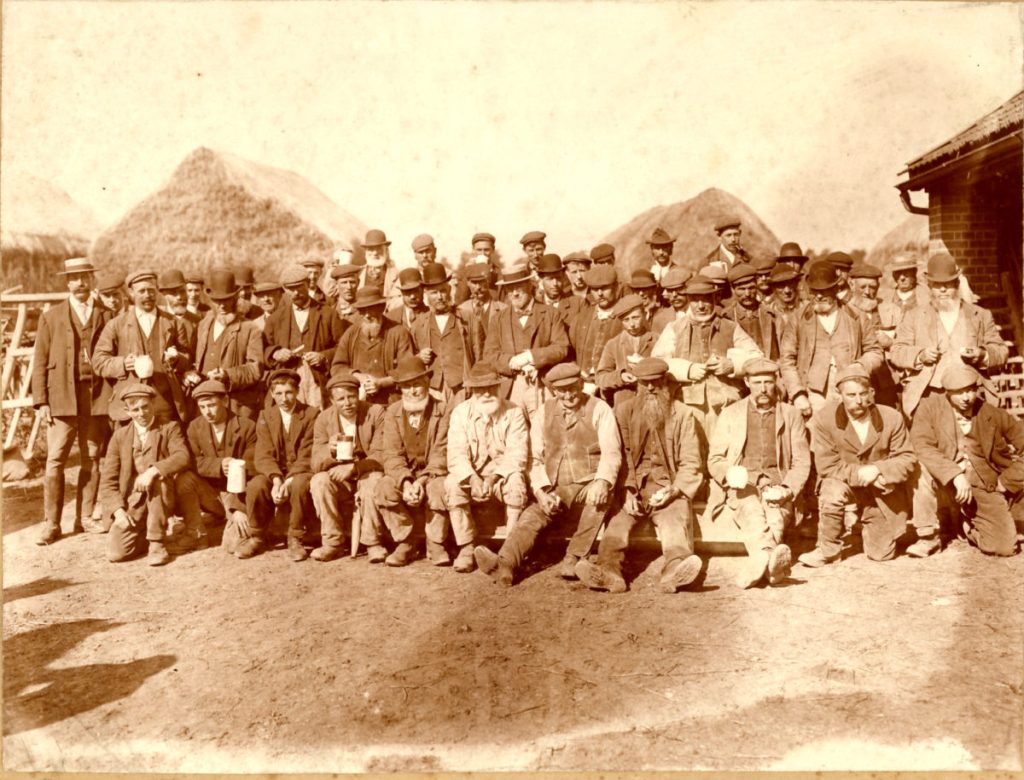
For centuries residents of Blunts Hall were tenant farmers until the late nineteenth century when Charles Hedley Strutt, son of the 2nd Baron Lord Rayleigh of Terling, became the owner and continued farming the land. In this photograph dated 1906, he is seen in the centre of the group of Blunts Hall farmworkers, probably taken at harvest time.
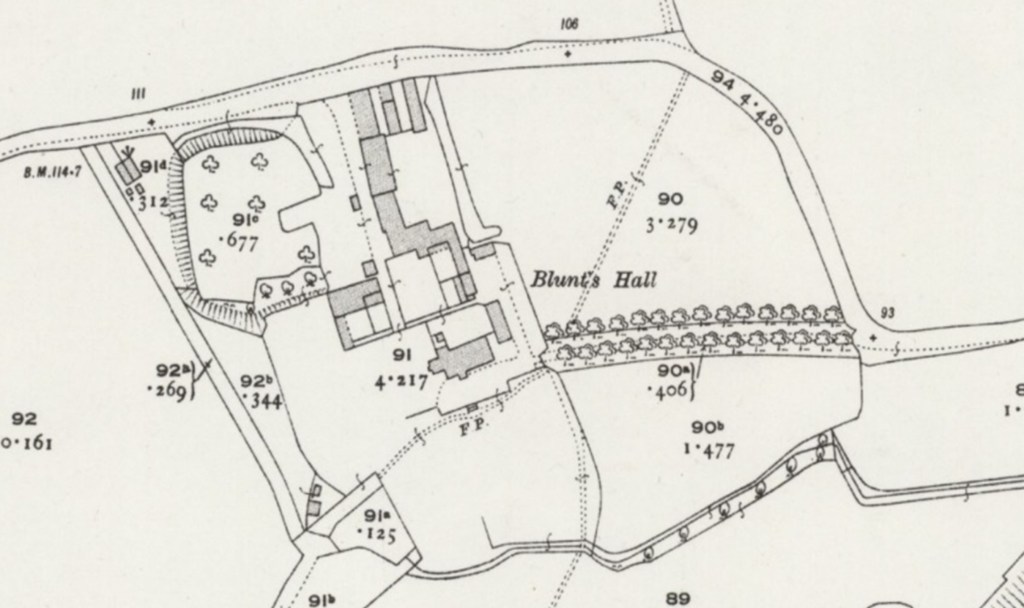
Ordnance Survey Map from 1913
Much of the house and the garden you see today is the influence of Charles Strutt during his time as an MP. A lime avenue was planted along the new driveway to the property in 1900 shown clearly on this Ordnance Survey map of 1913. A red brick wall was built surrounding the gardens and orchard and creating a clear division between the house and farmyard.
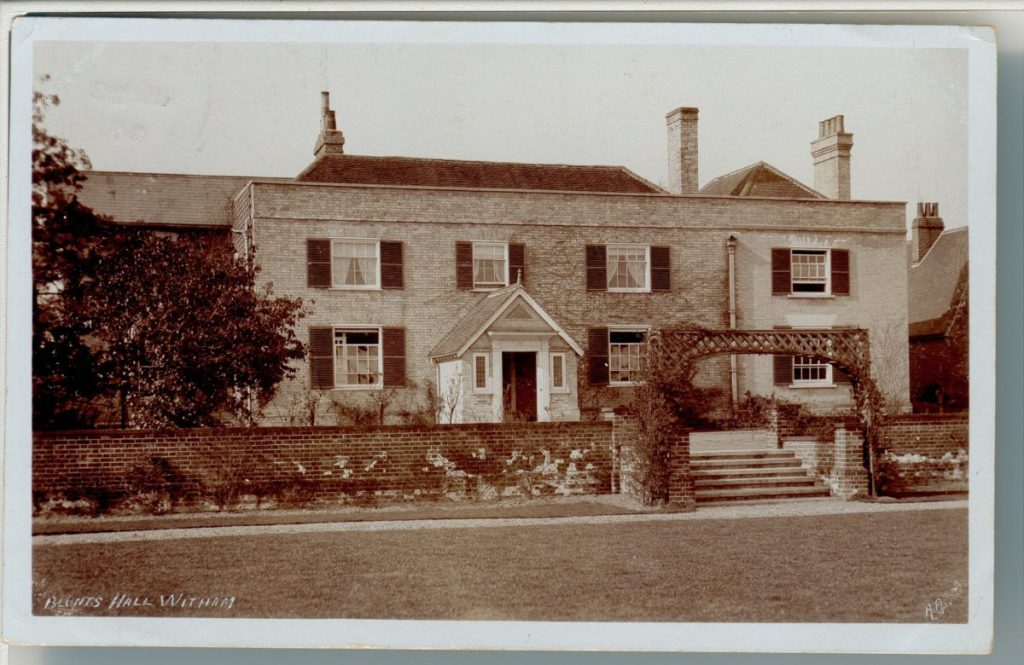
A postcard (above) of Blunts Hall dated 1908 shows the front of the Hall after extensive landscaping to create different levels around the garden. Changes in height were accentuated by the gravel sweep laid to the front of the house surrounded by a red brick wall with formal steps leading down to the front lawns.
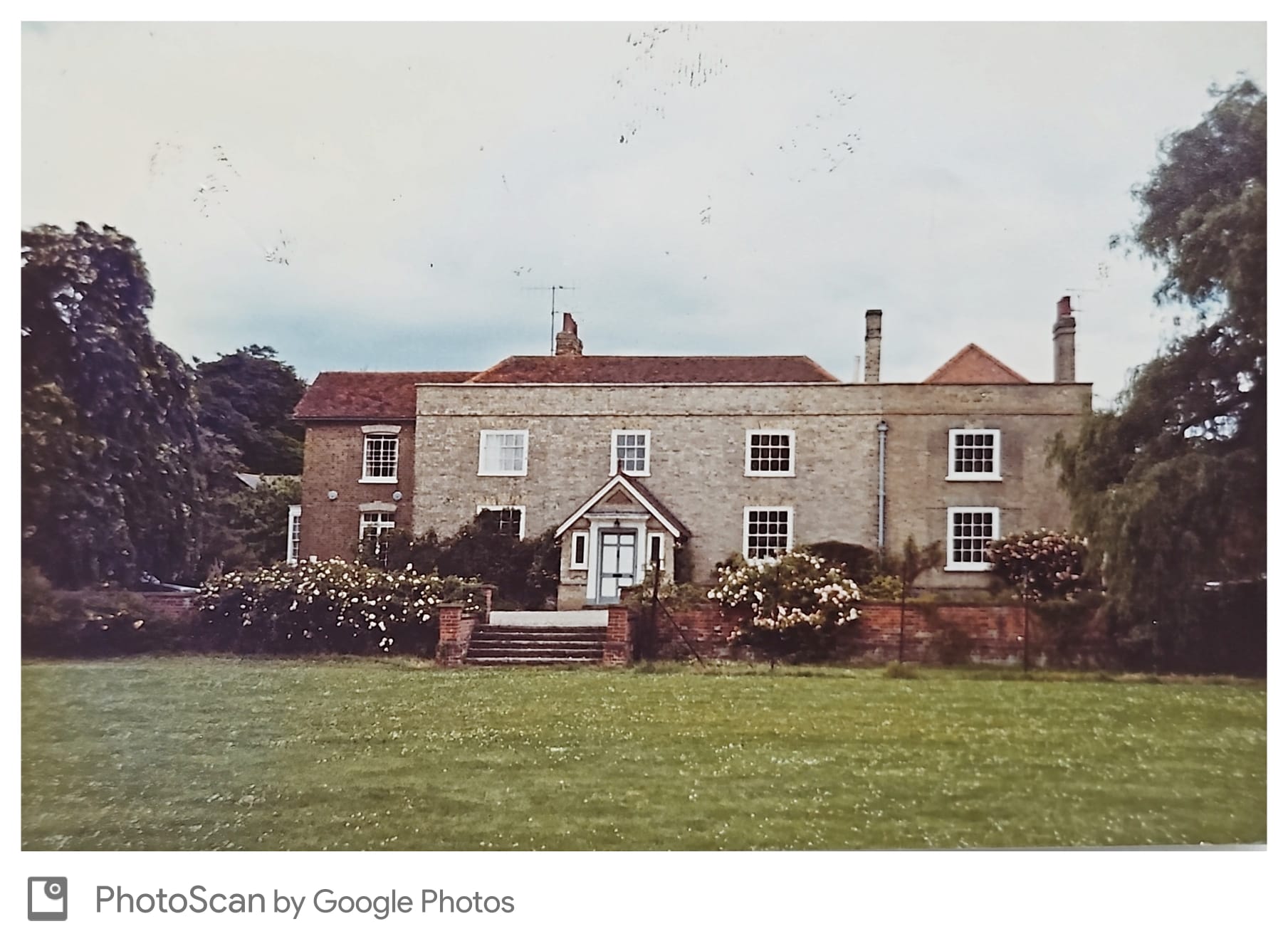
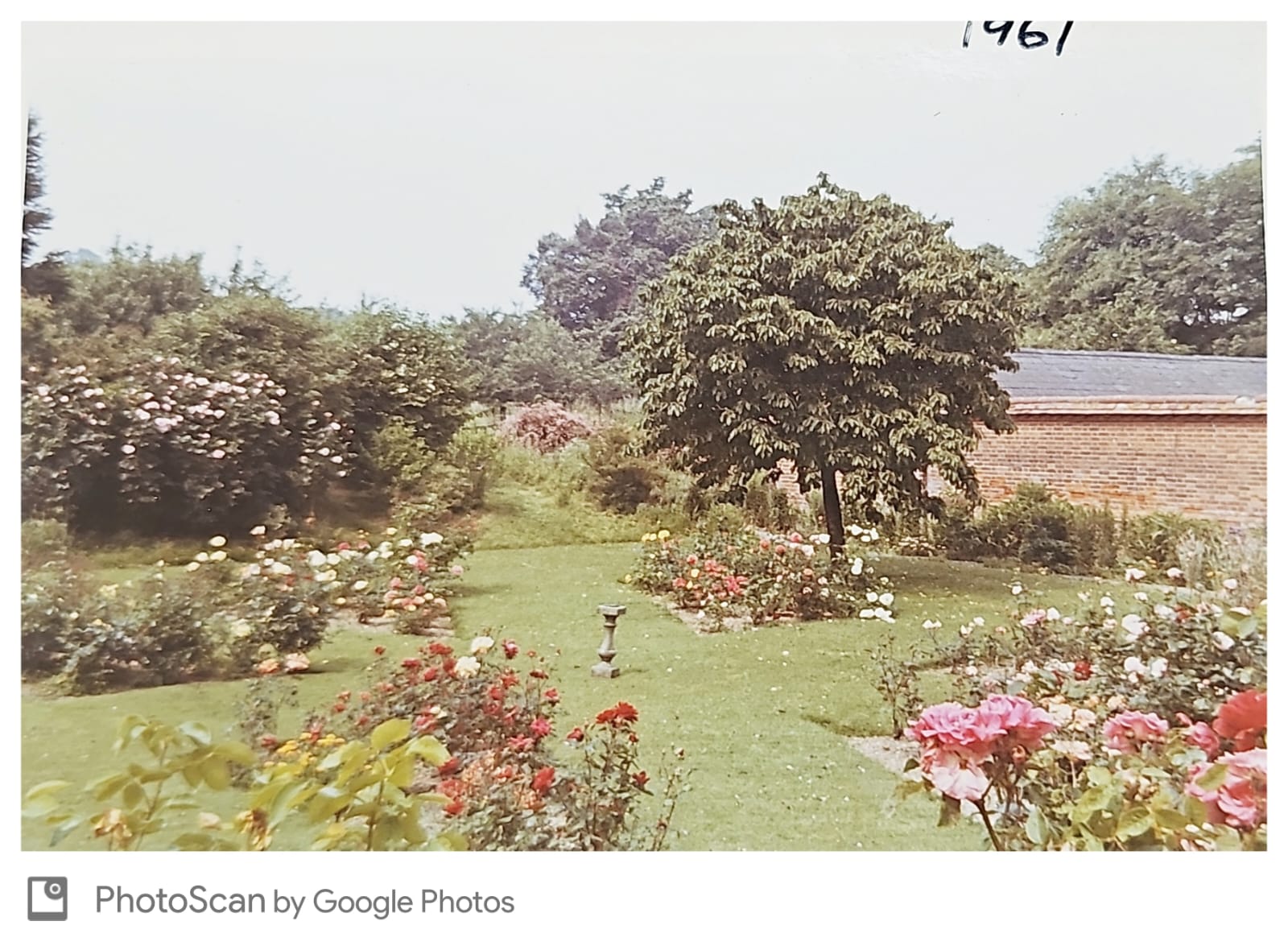
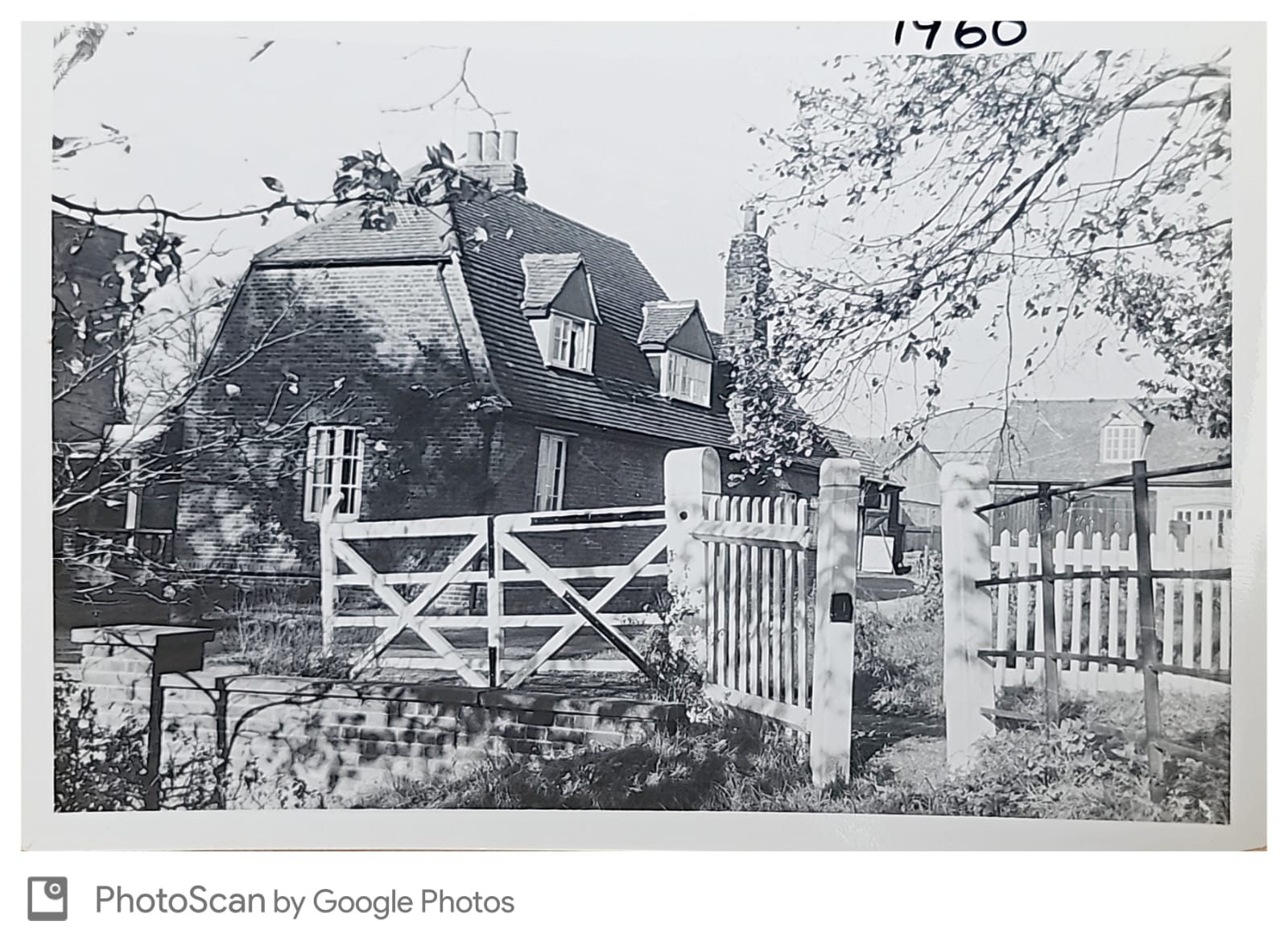
Images given to us from a family who lived here in 1960


20th Century: Restoring the Garden
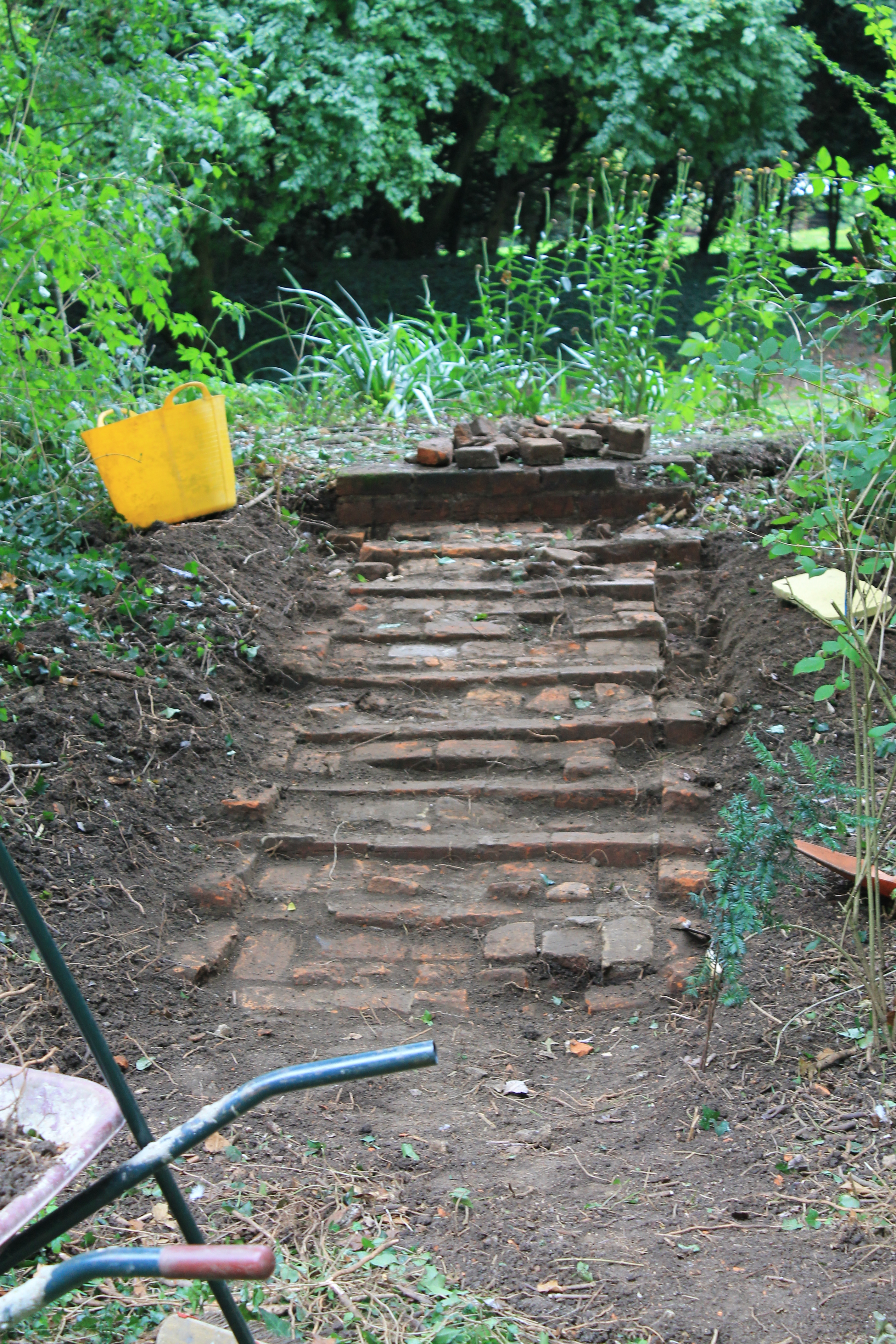
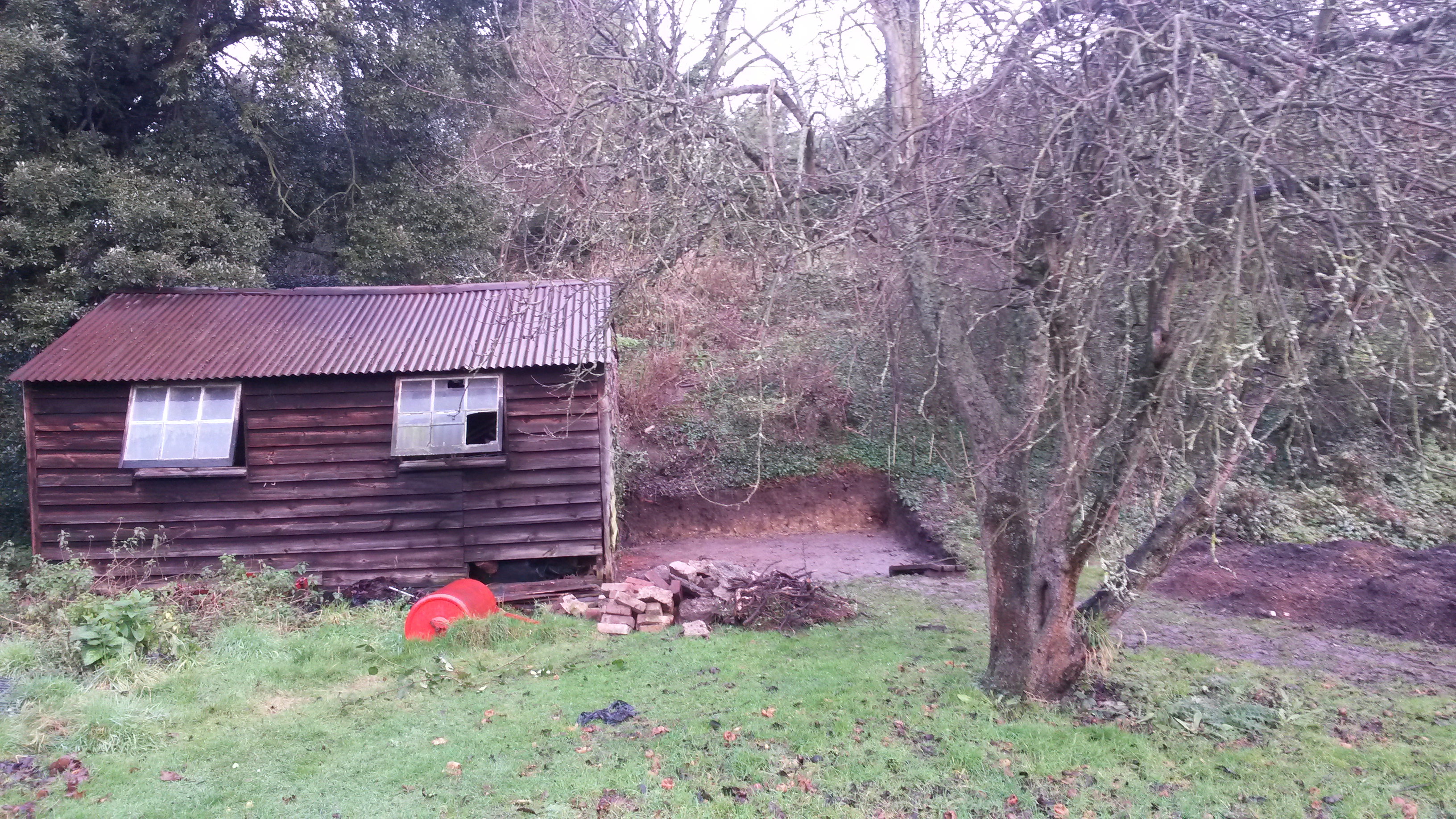
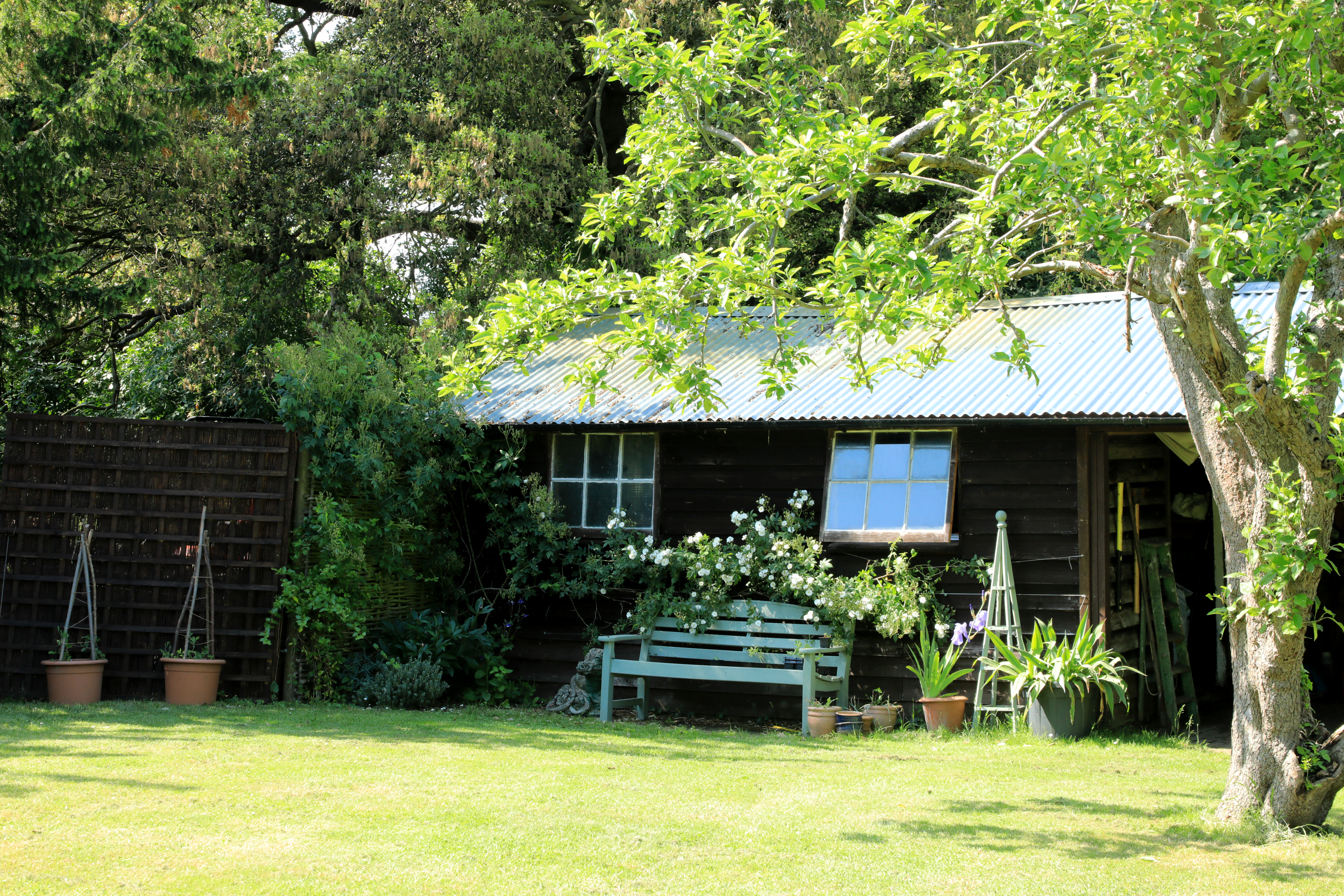
During our garden clearing we uncovered red brick steps and paths from the Victorian period and earlier. Unfortunately some of these lead nowhere but it is fun to speculate what was at the end of the path! Clearing the overgrown kitchen garden and productive area we found the Victorian Potting Shed and Cold Frames. These have been restored and are used for their original functions. In the summer the Cold Frame doubles as a heritage Sweet Pea bed. The interior of the Potting Shed still has the original windows and work bench which have been left in situ.
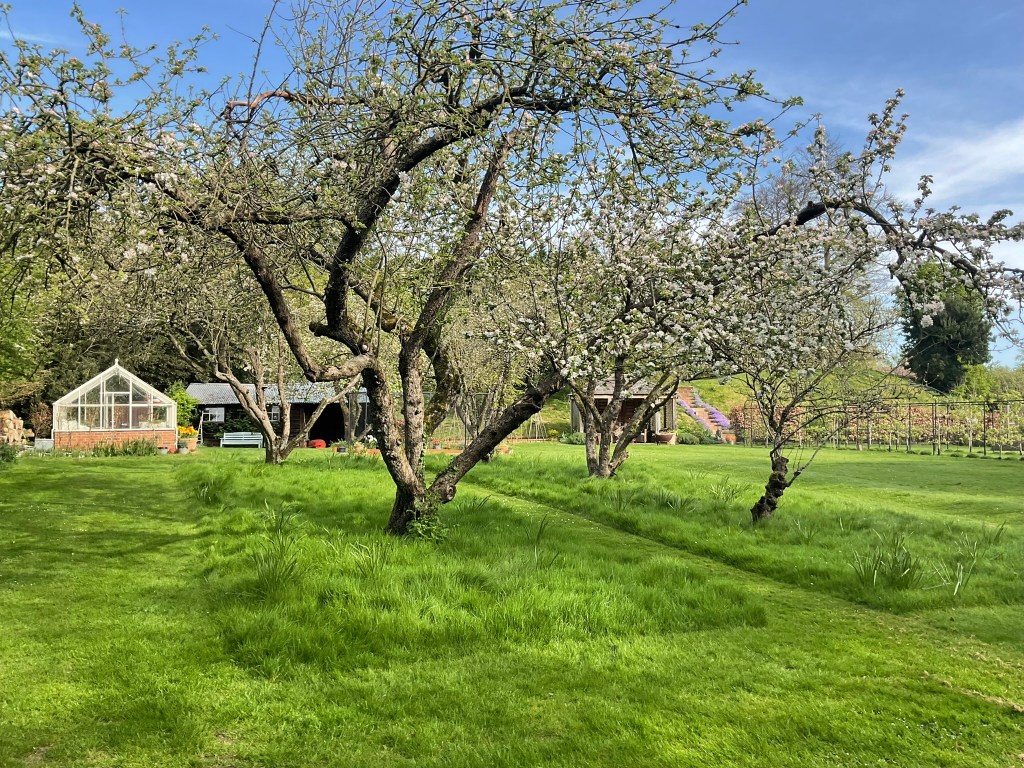
Some of the original trees have survived in our Orchard and have a profusion of blossom in spring and fruit in summer. The varieties were introduced by local fruit nurserymen William Seabrook & Sons at their Boreham site from the late 1800s. We have Monarch, an old variety of cooking apple introduced in 1888, and Acme, a late red dessert apple in 1944.
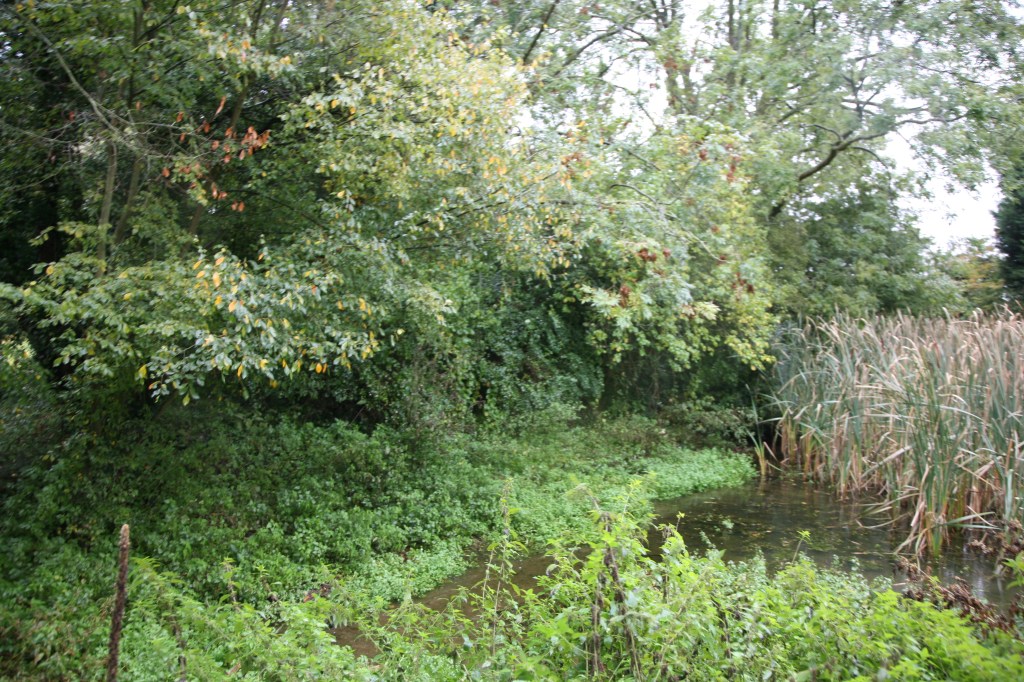
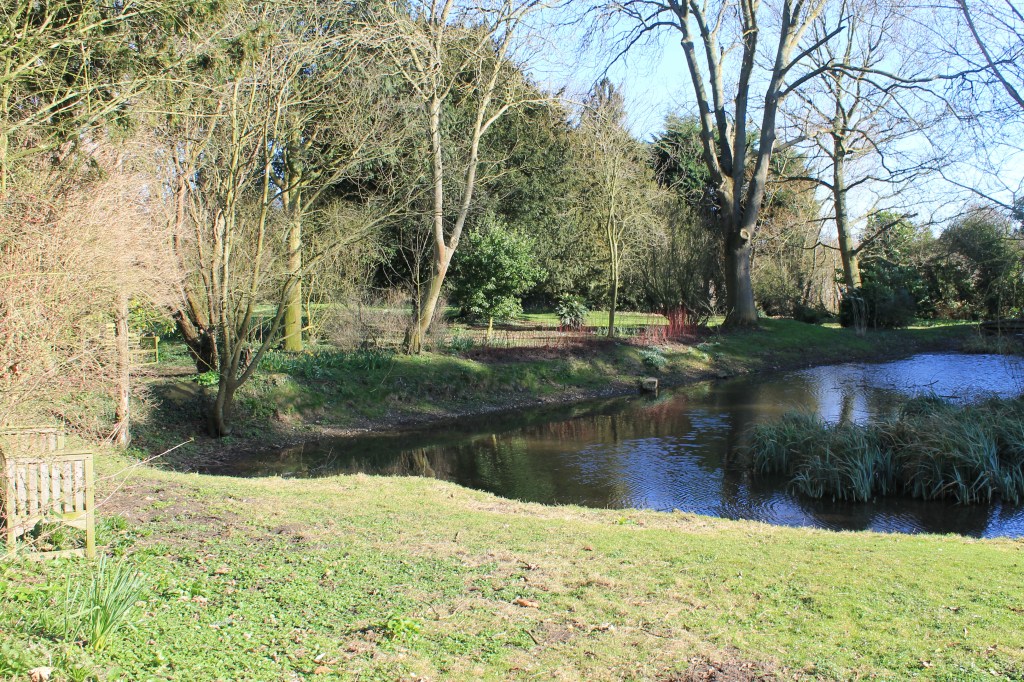
After pulling and removing boatloads of reeds we revealed the Pond area which was much larger than we anticipated. Timothy Skynners 1732 Survey of Blunts Hall Estate for the then owner Roger Pettigrew clearly shows the pond surrounded by trees. We are happy to welcome ducks, coots and more importantly crested newts as residents.
 Home
Home 